
Looking for a Sunday School That’s Not Overstimulating? Here’s What We Do Differently
Picture the usual Sunday school pickup. Your child comes out buzzing, talking too fast, half describing a game and half describing a Bible story, and you can’t tell where one ended and the other began. By dinner they’re wired and cranky. The hour wasn’t wasted, but it left them stimulated rather than settled.
A growing number of parents are asking for something calmer: a calm sunday school for kids that still takes the Bible seriously without relying on noise, screens, or competition to hold attention. At NCC Sentul, we use a method called Godly Play, a quiet, story-based approach where children wonder about God rather than get entertained by him. As Psalm 46:10 puts it: “Be still, and know that I am God.”
This article walks through why the overstimulation problem is real, what Godly Play actually is, and how it looks on a normal Sunday at our church.
Why Are So Many Parents Looking for a Calmer Sunday School?
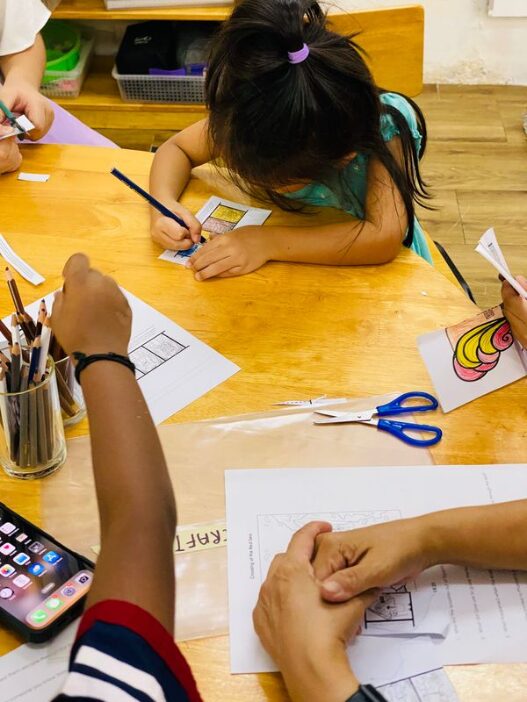
Children’s ministry has borrowed heavily from entertainment culture over the past couple of decades. Flashing lights, competitive games, loud music, and screens have become the default way many churches try to hold a child’s attention for an hour.
Foundation Worldview makes the point plainly: many children’s ministries have drifted toward entertaining kids rather than instructing them in biblical truth, and real formation asks for more than a good show. The concern isn’t that fun is wrong. It’s that stimulation has quietly taken the place of reflection.
Faith was never meant to be delivered as a weekly spectacle. In Deuteronomy 6:6-7, Moses told the Israelites, on the edge of the Promised Land, to keep God’s commands on their hearts and to talk about them at home, on the road, at every ordinary moment. Moses was speaking to parents, not programme directors. He was describing a rhythm woven into daily life, not a one-hour event built to impress. That’s the model a calmer Sunday school is trying to recover.
What Is Godly Play, and Why Does It Work Differently?
Godly Play was developed by Jerome Berryman, an Episcopal priest who trained in Montessori education. The Godly Play Foundation describes it as an approach where lessons are told as stories using simple hands-on materials, followed by open “I wonder” questions and a stretch of quiet time for the child to respond however they like.
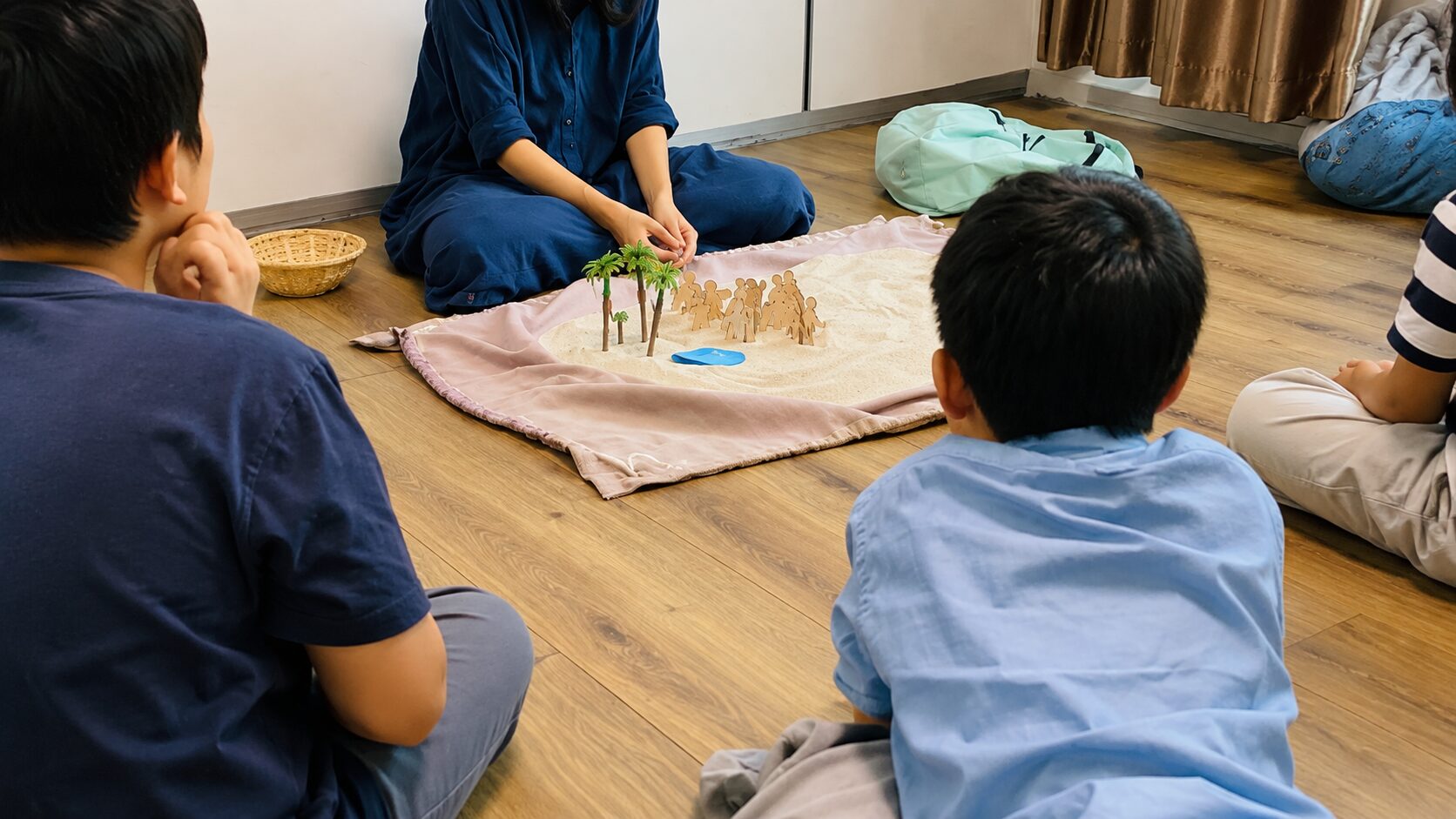
There’s no quiz at the end, and no right answer to chase. A teacher tells a Bible story slowly, using wooden figures or cloth or sand, then asks things like “I wonder what part of this story is most important to you.” Children sit with the question. Some draw. Some build. Some just stay quiet.
The method assumes a child is already capable of relating to God, not an empty container that needs constant stimulation to stay engaged. That assumption changes everything about the pacing.
It also lines up with something we see in 1 Samuel 3:1-10, the story of young Samuel hearing God’s voice at night while serving in the temple under the priest Eli. Samuel was a boy living in a spiritually noisy, distracted era, and God’s voice was easy to miss. When Samuel first heard it, he assumed it was Eli calling him. Eli had to teach him to recognise a quiet voice in a quiet room. God didn’t compete with noise to reach Samuel. He waited for stillness. A calm setting often makes it possible to hear God at all.
How Does This Actually Look at NCC Sentul?
On a normal Sunday, children from toddler age up to 12 gather in small groups on Level 1 of the church, meeting at the same time as the main service. There’s no stage, no microphone, no competition for the loudest reaction. A teacher tells a Bible story with physical materials children can see and touch, then opens space for wondering questions before the children move into quiet, self-directed response time.
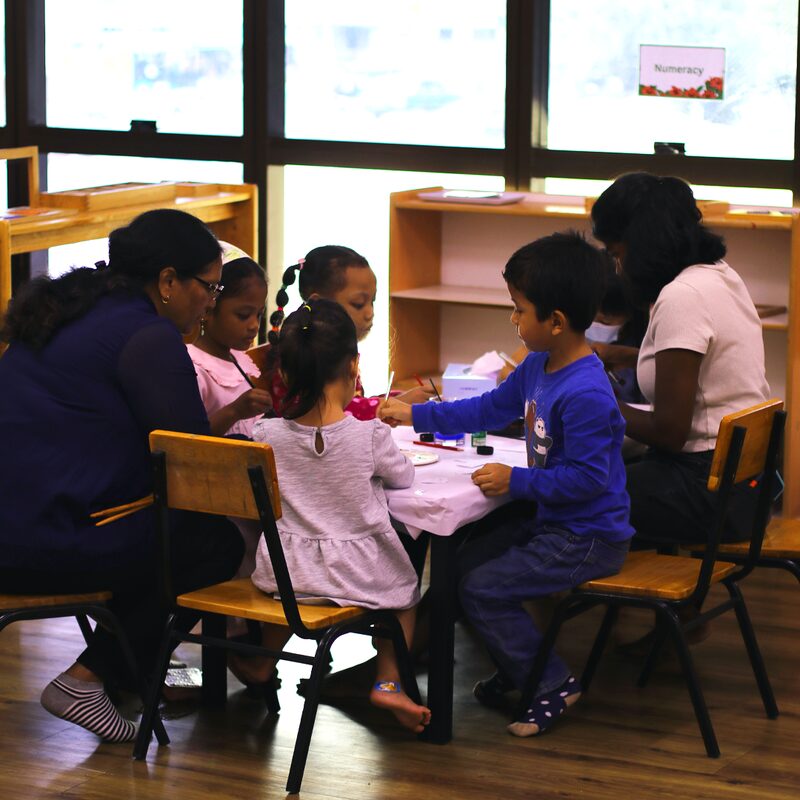
This rhythm mirrors what Jesus modelled in Mark 10:13-16. Mark records the disciples trying to keep children away from Jesus, likely thinking he had more important things to do. Jesus corrected them in front of everyone, insisting the children come to him, and said the kingdom of God belongs to people like them. Jesus didn’t ask the children to perform for his attention. He met them where they already were. That’s the posture we’re trying to build into our godly play sunday school: children coming to Jesus on terms that actually fit them.
You can read more about how our Sunday School runs week to week, including ages and timing.
Isn’t Quiet Just… Boring for Kids?
It’s a fair question, and it usually comes from parents whose kids are genuinely lively. Quiet doesn’t mean passive. Wondering questions and hands-on materials keep children engaged without needing adrenaline to do it. A child moving wooden figures across a felt underlay while thinking through a Bible story is not disengaged. They’re just not being managed by noise.
Calmer environments also tend to help children process and retain what they’ve heard, rather than leaving them overstimulated and unable to sit still an hour later. The goal is giving a child room to have their own encounter with God, instead of managing a reaction to lights and games.
A Calmer Kind of Sunday School
A quieter Sunday school isn’t a lesser one. For some children, it may be exactly the space they need to actually meet God, rather than just leave excited about the games. If you’d like to see a Godly Play session for yourself, plan your visit and join us on a Sunday at 10am.
Frequently Asked Questions:
What is Godly Play in Sunday school?
Godly Play is a Montessori-based approach to children’s ministry where a teacher tells Bible stories slowly using simple materials, then asks open “I wonder” questions. Children respond in their own way, often through quiet creative activity, rather than through games or screens.
Is Godly Play the same as Montessori?
Not exactly. Godly Play was built on Montessori principles by Jerome Berryman, who trained in the method himself, but it applies those ideas specifically to Christian faith formation and Bible storytelling, not general early education.
What age group is Godly Play suitable for?
Godly Play works well from toddler age through primary school years. At NCC Sentul, our Sunday School runs for children from toddlers up to 12, with age-appropriate stories and materials for each group.
Why do some churches avoid screens in children’s ministry?
Some churches worry that screens and constant stimulation crowd out reflection, making it harder for children to sit with a Bible story and actually think about it. Stillness, as Psalm 46:10 suggests, is often where genuine encounter with God happens.
How do I know if a calmer Sunday school is right for my child?
If your child comes home from children’s programmes overstimulated rather than settled, or if they seem to process the world better through quiet, hands-on activity, a calmer approach like Godly Play is worth trying for a few weeks.
Visit Us This Sunday
Experience authentic worship, meet genuine people, and discover community in Sentul. Everyone is welcome—come as you are.
Plan Your Visit