Mental Health in Christianity: Why Faith and Therapy Were Never Opposites

Image
NCC Content Team
7 min read
August 26, 2026
Image
NCC Content Team
7 min read
August 26, 2026

At church you can say you are exhausted. You can say it has been a hard season, that work is a lot, that you would appreciate prayer. You cannot say you have been diagnosed, or that you are on the second medication because the first one flattened you. The vocabulary runs out at a very particular point, and everyone learns where that point is without ever being told.

Whatever that silence feels like from the inside, it is a very ordinary company. Health Minister Dr Dzulkefly Ahmad, citing the National Health and Morbidity Survey 2023, said that around one million Malaysians aged 15 and above live with depression, which is 4.6 per cent of that population and double the figure from 2019. The Star reported that the rise was steepest among younger age groups, specifically people aged 16 to 29.

Mental health in Christianity has become a thing people handle alone, on a Tuesday afternoon, with half a day taken off work. The Bible says a great deal about despair, about asking for help, and about what a church owes someone who is struggling. Very little of it matches what the silence assumes.

Short answer: Christianity does not treat mental illness as a lack of faith. Scripture names despair honestly, and Jesus said it is the sick who need a doctor (Mark 2:17). Faith and treatment work together.

Does struggling with my mental health mean my faith is weak?

No. And you do not have to take that on my word, because the Bible says it far more plainly than most of us were taught.

Look at Psalm 42:5-6. “Why, my soul, are you downcast? Why so disturbed within me?” Context: the sons of Korah wrote this, temple worshippers cut off from Jerusalem and the worship they loved. Meaning: the writer names the despair out loud and chooses to remember God while still inside it. For the people who first sang this, it was a worship song with room in it for grief. Application: you can be downcast and faithful in the same breath, and the Bible hands you a song for it rather than a rebuke.

Most of the shame we carry about this was handed to us by the culture around the church rather than by Scripture. Prof Dr Ng Chong Guan, a psychiatry professor at Universiti Malaya Medical Centre and deputy president of the Malaysian Mental Health Association, put the Malaysian version of it bluntly: mental illness here is often read as a weakness or a spiritual problem rather than a legitimate medical condition. He added that for young Malaysians, stigma works as a reputational risk, enough on its own to stop them asking for help.

So the thing keeping you quiet on a Sunday is a reputational calculation, absorbed from the people sitting around you.

Why does the church sometimes get this so wrong?

Churches are made of people, and people repeat what they were handed. Most of us were handed a well-meaning idea somewhere along the way: that a Christian with enough faith should not need anything else. It sounds spiritual until you read Paul.

Paul settles it in 2 Corinthians 12:7-10. Context: he is writing to a Corinthian church that had been questioning whether he was a credible apostle, and he defends himself by pointing at his weakness instead of his track record. Meaning: Paul prayed three times for the thorn to go and it stayed. He is explicit that God chose to leave it, and that grace met him inside it. Application: an unanswered prayer for healing says nothing about your faith. It happened to the man who wrote a third of the New Testament.

The medication question tends to sit underneath all of this. Edward Welch, writing for CCEF, frames the decision to take medication as a wisdom question rather than a right-or-wrong one, and notes that wise people take counsel from physicians. That puts the question in a more useful place. You get to work out, with a doctor who knows your history, what is wise for your body.

Most of us have watched this go two ways at church. Someone admits they are struggling and the room fills with advice, or one person follows up on Wednesday without being asked. People remember the second one for years.

Is it okay for a Christian to see a therapist or take medication?

Jesus reached for a medical picture to explain his own ministry, which is a strange thing to overlook. In Mark 2:17 he says, “It is not the healthy who need a doctor, but the sick.” Context: he is replying to religious leaders who objected to him eating with tax collectors and sinners at Levi’s house. Meaning: he uses the doctor image approvingly and without irony, and presents needing help as the ordinary condition of the people he came for. Application: if Jesus can describe himself as a physician, seeing one is not a betrayal of him.

Getting that help is harder here than the American articles on this topic assume. Prof Ng noted that Malaysia has roughly 500 psychiatrists nationwide, about one per 100,000 people, against a World Health Organisation recommendation of one per 10,000, and that services cluster in the Klang Valley. When care is that scarce, silence costs you more, because the queue is long and starting late makes it longer.

Cost is the second wall, and it stops people just as effectively as shame does. Wellness x Dignity was built with that in mind. It began in 2012 as the mental health unit of Dignity for Children Foundation, the social arm of our church, and opened its Psychological Centre to the public in 2024.

The team offers counselling and psychotherapy, psychological assessments, and play and art based work for children. Fees are tiered, with reduced rates for university students and for B40 households. The centre is on Jalan 14/48a in Sentul Raya Boulevard, two floors up from where we meet on Sundays.

More Malaysians are asking anyway. Talian HEAL 15555 has taken 230,151 calls since October 2022, and yearly calls climbed from 27,738 in 2023 to 90,981 in 2025. That is mostly people deciding to speak up, which is a good sign badly disguised as a worrying one.

None of which means recovery arrives on schedule. Desiring God describes depression as something that darkens the door of most Christians at some point, a fog that stubbornly clouds hope and happiness. You cannot argue with fog. It thins out slowly, and usually only with help.

What does God do with a person who is barely holding on?

He comes close. That is the claim the Bible makes, and it is worth checking for yourself.

Psalm 34:18 says, “The Lord is close to the brokenhearted and saves those who are crushed in spirit.” Context: this is a psalm of David, written after he escaped Abimelek by pretending to be insane, so it comes out of desperation rather than victory. Meaning: David is describing how near God gets, and how early. God draws close first and does not wait for the broken to pull themselves together as a condition of showing up. Application: you get his nearness while you are still in the worst of it, before anything improves.
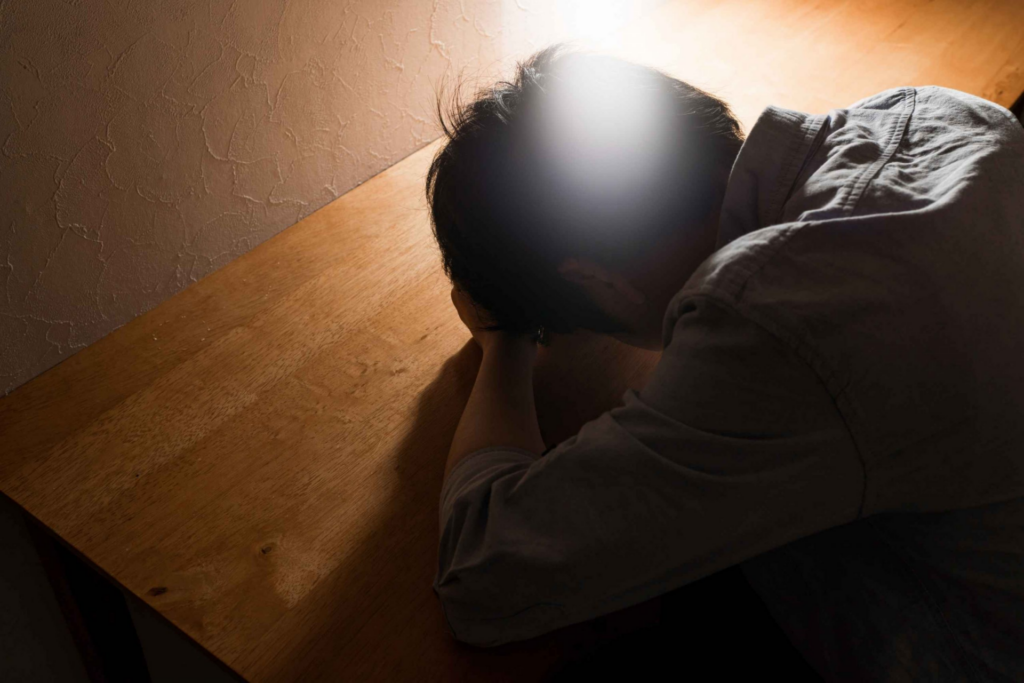
Some of you stopped praying months ago because you felt you had nothing worth bringing. The psalm assumes you arrive crushed, and lists no other entry requirement. Prayer in that season is usually short, blunt, sometimes angry, often just a sentence before sleep. The psalms are full of exactly that, which suggests God has never needed it dressed up.

What is the church actually for, then?

A care group is not therapy and a pastor is not a psychiatrist, and pretending otherwise has hurt a lot of people. What a church can offer is a place where the load gets shared around.

Galatians 6:2 puts it as an instruction: “Carry each other’s burdens, and in this way you will fulfil the law of Christ.” Context: Paul is telling the Galatian churches how to treat a believer who is struggling, right after warning them against thinking too highly of themselves. Meaning: the command assumes some burdens are too heavy for one person, and it treats carrying someone else’s load as obedience rather than charity. Application: letting someone help you is the church working the way Paul designed it, so accepting help is obedience too.

In practice this looks unglamorous. It is listening without trying to fix anything, then asking again the following week once the person has stopped bringing it up on their own. Sometimes it is sitting in a waiting room while your friend goes in. Our young adults gather in a room where big questions are shared, not just tolerated, and that ordinary kind of care is most of what happens there.

Frequently Asked Questions:

Is depression a sin in Christianity?

No. Depression is a health condition, not a moral failure. Scripture repeatedly shows faithful people in deep distress without treating that distress as sin. Psalm 42:5-6 has a temple worshipper calling his own soul downcast in the middle of a worship song, which is about as clear a signal as the Bible gives.

What does the Bible say about mental health?

The Bible does not use the modern term, but it speaks constantly about the mind, the heart and the crushed spirit. Psalm 34:18 says God is close to the brokenhearted. The consistent pattern is that God draws near to people in distress rather than standing back from them.

Can a Christian take antidepressants?

Yes. Medication is a wisdom decision made with a doctor, not a test of faith. Jesus described himself using the picture of a physician in Mark 2:17, and Paul lived with a thorn God chose not to remove (2 Corinthians 12:7-10). Neither passage supports refusing treatment.

Which Bible characters struggled with depression?

Elijah asked God to take his life and then slept under a broom tree, where God fed him before saying anything (1 Kings 19:4-9). David wrote psalms out of desperation, and Paul described being under pressure beyond his ability to endure. None of them are presented as failures.

Where can I get mental health help in Malaysia?

Talian HEAL 15555 is the national helpline, staffed by Health Ministry counsellors daily from 8am to midnight. Befrienders Kuala Lumpur is on 03-7627 2929, and your Klinik Kesihatan can refer you. For therapy in Sentul, Wellness x Dignity takes public appointments on 011-3988 5267.

Where to go from here?

Your faith is not the thing that broke. Scripture has made room for the downcast soul for three thousand years, and it did not start doing so reluctantly.

Try one small thing this week. Say it out loud to one person you trust, in whatever words you have. If you need clinical help, make the call instead of waiting for a better week to turn up, because it rarely does on its own.

You are welcome to plan a visit to NCC Sentul if you want somewhere the vocabulary does not run out. We meet on Sundays at 10am. Come as you are, including the parts you have been keeping to yourself.
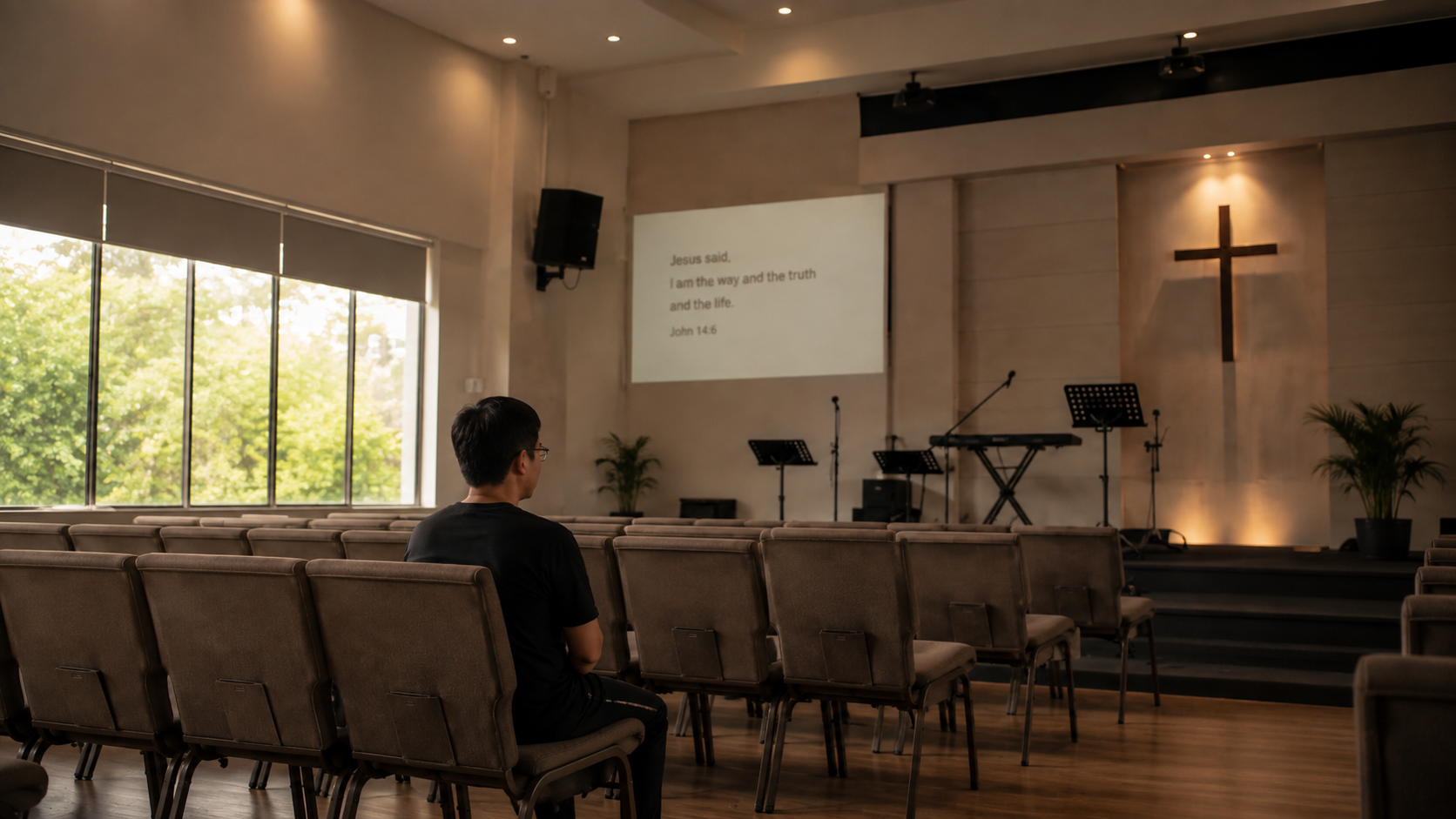
At church you can say you are exhausted. You can say it has been a hard season, that work is a lot, that you would appreciate prayer. You cannot say you have been diagnosed, or that you are on the second medication because the first one flattened you. The vocabulary runs out at a very particular point, and everyone learns where that point is without ever being told.

Whatever that silence feels like from the inside, it is a very ordinary company. Health Minister Dr Dzulkefly Ahmad, citing the National Health and Morbidity Survey 2023, said that around one million Malaysians aged 15 and above live with depression, which is 4.6 per cent of that population and double the figure from 2019. The Star reported that the rise was steepest among younger age groups, specifically people aged 16 to 29.

Mental health in Christianity has become a thing people handle alone, on a Tuesday afternoon, with half a day taken off work. The Bible says a great deal about despair, about asking for help, and about what a church owes someone who is struggling. Very little of it matches what the silence assumes.

Short answer: Christianity does not treat mental illness as a lack of faith. Scripture names despair honestly, and Jesus said it is the sick who need a doctor (Mark 2:17). Faith and treatment work together.

Does struggling with my mental health mean my faith is weak?

No. And you do not have to take that on my word, because the Bible says it far more plainly than most of us were taught.

Look at Psalm 42:5-6. “Why, my soul, are you downcast? Why so disturbed within me?” Context: the sons of Korah wrote this, temple worshippers cut off from Jerusalem and the worship they loved. Meaning: the writer names the despair out loud and chooses to remember God while still inside it. For the people who first sang this, it was a worship song with room in it for grief. Application: you can be downcast and faithful in the same breath, and the Bible hands you a song for it rather than a rebuke.

Most of the shame we carry about this was handed to us by the culture around the church rather than by Scripture. Prof Dr Ng Chong Guan, a psychiatry professor at Universiti Malaya Medical Centre and deputy president of the Malaysian Mental Health Association, put the Malaysian version of it bluntly: mental illness here is often read as a weakness or a spiritual problem rather than a legitimate medical condition. He added that for young Malaysians, stigma works as a reputational risk, enough on its own to stop them asking for help.

So the thing keeping you quiet on a Sunday is a reputational calculation, absorbed from the people sitting around you.

Why does the church sometimes get this so wrong?

Churches are made of people, and people repeat what they were handed. Most of us were handed a well-meaning idea somewhere along the way: that a Christian with enough faith should not need anything else. It sounds spiritual until you read Paul.

Paul settles it in 2 Corinthians 12:7-10. Context: he is writing to a Corinthian church that had been questioning whether he was a credible apostle, and he defends himself by pointing at his weakness instead of his track record. Meaning: Paul prayed three times for the thorn to go and it stayed. He is explicit that God chose to leave it, and that grace met him inside it. Application: an unanswered prayer for healing says nothing about your faith. It happened to the man who wrote a third of the New Testament.

The medication question tends to sit underneath all of this. Edward Welch, writing for CCEF, frames the decision to take medication as a wisdom question rather than a right-or-wrong one, and notes that wise people take counsel from physicians. That puts the question in a more useful place. You get to work out, with a doctor who knows your history, what is wise for your body.

Most of us have watched this go two ways at church. Someone admits they are struggling and the room fills with advice, or one person follows up on Wednesday without being asked. People remember the second one for years.

Is it okay for a Christian to see a therapist or take medication?

Jesus reached for a medical picture to explain his own ministry, which is a strange thing to overlook. In Mark 2:17 he says, “It is not the healthy who need a doctor, but the sick.” Context: he is replying to religious leaders who objected to him eating with tax collectors and sinners at Levi’s house. Meaning: he uses the doctor image approvingly and without irony, and presents needing help as the ordinary condition of the people he came for. Application: if Jesus can describe himself as a physician, seeing one is not a betrayal of him.

Getting that help is harder here than the American articles on this topic assume. Prof Ng noted that Malaysia has roughly 500 psychiatrists nationwide, about one per 100,000 people, against a World Health Organisation recommendation of one per 10,000, and that services cluster in the Klang Valley. When care is that scarce, silence costs you more, because the queue is long and starting late makes it longer.

Cost is the second wall, and it stops people just as effectively as shame does. Wellness x Dignity was built with that in mind. It began in 2012 as the mental health unit of Dignity for Children Foundation, the social arm of our church, and opened its Psychological Centre to the public in 2024.

The team offers counselling and psychotherapy, psychological assessments, and play and art based work for children. Fees are tiered, with reduced rates for university students and for B40 households. The centre is on Jalan 14/48a in Sentul Raya Boulevard, two floors up from where we meet on Sundays.

More Malaysians are asking anyway. Talian HEAL 15555 has taken 230,151 calls since October 2022, and yearly calls climbed from 27,738 in 2023 to 90,981 in 2025. That is mostly people deciding to speak up, which is a good sign badly disguised as a worrying one.

None of which means recovery arrives on schedule. Desiring God describes depression as something that darkens the door of most Christians at some point, a fog that stubbornly clouds hope and happiness. You cannot argue with fog. It thins out slowly, and usually only with help.

What does God do with a person who is barely holding on?

He comes close. That is the claim the Bible makes, and it is worth checking for yourself.

Psalm 34:18 says, “The Lord is close to the brokenhearted and saves those who are crushed in spirit.” Context: this is a psalm of David, written after he escaped Abimelek by pretending to be insane, so it comes out of desperation rather than victory. Meaning: David is describing how near God gets, and how early. God draws close first and does not wait for the broken to pull themselves together as a condition of showing up. Application: you get his nearness while you are still in the worst of it, before anything improves.

Some of you stopped praying months ago because you felt you had nothing worth bringing. The psalm assumes you arrive crushed, and lists no other entry requirement. Prayer in that season is usually short, blunt, sometimes angry, often just a sentence before sleep. The psalms are full of exactly that, which suggests God has never needed it dressed up.

What is the church actually for, then?

A care group is not therapy and a pastor is not a psychiatrist, and pretending otherwise has hurt a lot of people. What a church can offer is a place where the load gets shared around.

Galatians 6:2 puts it as an instruction: “Carry each other’s burdens, and in this way you will fulfil the law of Christ.” Context: Paul is telling the Galatian churches how to treat a believer who is struggling, right after warning them against thinking too highly of themselves. Meaning: the command assumes some burdens are too heavy for one person, and it treats carrying someone else’s load as obedience rather than charity. Application: letting someone help you is the church working the way Paul designed it, so accepting help is obedience too.

In practice this looks unglamorous. It is listening without trying to fix anything, then asking again the following week once the person has stopped bringing it up on their own. Sometimes it is sitting in a waiting room while your friend goes in. Our young adults gather in a room where big questions are shared, not just tolerated, and that ordinary kind of care is most of what happens there.

Frequently Asked Questions:

Is depression a sin in Christianity?

No. Depression is a health condition, not a moral failure. Scripture repeatedly shows faithful people in deep distress without treating that distress as sin. Psalm 42:5-6 has a temple worshipper calling his own soul downcast in the middle of a worship song, which is about as clear a signal as the Bible gives.

What does the Bible say about mental health?

The Bible does not use the modern term, but it speaks constantly about the mind, the heart and the crushed spirit. Psalm 34:18 says God is close to the brokenhearted. The consistent pattern is that God draws near to people in distress rather than standing back from them.

Can a Christian take antidepressants?

Yes. Medication is a wisdom decision made with a doctor, not a test of faith. Jesus described himself using the picture of a physician in Mark 2:17, and Paul lived with a thorn God chose not to remove (2 Corinthians 12:7-10). Neither passage supports refusing treatment.

Which Bible characters struggled with depression?

Elijah asked God to take his life and then slept under a broom tree, where God fed him before saying anything (1 Kings 19:4-9). David wrote psalms out of desperation, and Paul described being under pressure beyond his ability to endure. None of them are presented as failures.

Where can I get mental health help in Malaysia?

Talian HEAL 15555 is the national helpline, staffed by Health Ministry counsellors daily from 8am to midnight. Befrienders Kuala Lumpur is on 03-7627 2929, and your Klinik Kesihatan can refer you. For therapy in Sentul, Wellness x Dignity takes public appointments on 011-3988 5267.

Where to go from here?

Your faith is not the thing that broke. Scripture has made room for the downcast soul for three thousand years, and it did not start doing so reluctantly.

Try one small thing this week. Say it out loud to one person you trust, in whatever words you have. If you need clinical help, make the call instead of waiting for a better week to turn up, because it rarely does on its own.

You are welcome to plan a visit to NCC Sentul if you want somewhere the vocabulary does not run out. We meet on Sundays at 10am. Come as you are, including the parts you have been keeping to yourself.

About New Covenant Community
Looking for a church in Sentul? New Covenant Community welcomes you with authentic worship, real community, and practical biblical teaching. English services (with live Chinese translations). Visit Sundays at 10am.

Explore Further:

About New Covenant Community
Looking for a church in Sentul? New Covenant Community welcomes you with authentic worship, real community, and practical biblical teaching. English services (with live Chinese translations). Visit Sundays at 10am.
Visit Us This Sunday
Experience authentic worship, meet genuine people, and discover community in Sentul. Everyone is welcome—come as you are.
Plan Your Visit